
Diabetes and Heart Disease: The Hidden Connection
- Home
- Blog
Diabetes and Heart Disease: The Hidden Connection
Your aunt in Jamtara has been managing her diabetes carefully for years – watching her sugar, taking her tablets on time, visiting the local doctor for check-ins. What she hasn’t thought much about is her heart, because nothing has ever hurt there. That’s precisely the trap. Diabetes and heart disease are connected in ways that rarely announce themselves with obvious pain, which is exactly why so many families in Santhal Pargana are caught off guard.
If someone in your home has diabetes, this connection deserves more attention than it usually gets. Understanding it now, calmly, is far better than discovering it during an emergency.
Understanding Diabetic Heart Risk
Diabetic heart risk isn’t about diabetes “causing” a heart attack directly – it’s more gradual and quieter than that. Over years, consistently high blood sugar can damage the inner lining of blood vessels, making them more prone to narrowing and blockage. It can also affect the nerves that help regulate heart rhythm and signal pain, which is part of why some diabetic patients don’t feel the classic chest pain warning signs the way others do.
This combination – vessel damage plus blunted warning signals – is what makes diabetes such a significant, and often underestimated, contributor to heart disease. It’s not inevitable, but it is common enough that doctors treat diabetes as a serious heart risk factor in its own right, not just a separate condition to manage alongside it.
Symptoms, Causes, and Risk Factors Behind Diabetes Cardiac Complications
Diabetes cardiac complications can include coronary artery disease, weakened heart muscle function, and in some cases, heart failure over the long term. What makes this tricky is that symptoms can be subtle – unusual fatigue, mild breathlessness during routine activity, swelling in the feet or ankles, or a general sense of reduced stamina, rather than dramatic chest pain.
Risk increases with how long someone has had diabetes, how well-controlled their lood sugar has been, and whether they also have high blood pressure, high cholesterol, or a family history of heart disease. Smoking and excess weight add further strain. None of this means heart disease is guaranteed – but it does mean regular monitoring matters more for diabetic patients than for the general population.
Why This Matters for Diabetic Families in Santhal Pargana
Across Deoghar, Dumka, Giridih, Godda, and Jamtara, diabetes management has often meant regular visits to a local physician for sugar control, while the heart side of the equation gets far less attention – not out of neglect, but because a dedicated cardiology checkup has traditionally required a trip to a bigger city.
How diabetes affects the heart isn’t something families discuss often, partly because it doesn’t feel urgent until it suddenly is. A family managing a parent’s diabetes in Madhupur or Banka may feel confident about sugar levels being “under control,” without realising that heart health needs its own separate check-in, not just a side note during a diabetes visit.
Diabetes Heart Checkup and Care at Medifort Deoghar
A proper diabetes heart checkup brings together what diabetes management alone often misses. At Medifort Wellness Super Specialty Hospital, situated on Jasidih Deoghar Main Road, Ramchandrapur, opposite Indian Bank, near Narendra Bhawan, cardiology and endocrinology concerns can be evaluated together, giving diabetic patients a fuller picture of their health rather than two disconnected check-ups.
The hospital’s Cath Lab and cardiology team work alongside specialists in Neurology, Nephrology, Gastroenterology, Oncology, Pediatrics, Neonatology, and General Surgery, reflecting the same coordinated-care approach that the Medifort Wellness Group of Hospitals has built its reputation on since its founding in Bhagalpur, Bihar. For diabetic patients in Dumka, Giridih, Godda, Jamtara, and surrounding Santhal Pargana villages, this means heart health no longer has to be an afterthought squeezed into a distant city trip – and emergency support remains available at any hour, should the need arise.
What to Expect During Your Visit
For diabetic patients coming in for a heart checkup, the visit typically starts with a conversation about how long you’ve had diabetes, how your sugar has been trending, and any symptoms you’ve noticed, even ones that seem minor. From there, your cardiologist may recommend specific heart tests based on your individual risk profile.
Results are explained clearly, without medical jargon left unexplained, and any next steps – whether that’s lifestyle adjustments, medication, or further testing – are discussed together with you and your family. The aim is to build an ongoing relationship with your heart health, not a one-time test that gets filed away and forgotten.
Myths vs Facts About Diabetes and the Heart
Myth: If my sugar is under control, my heart is automatically fine.
Fact: Good sugar control helps, but it doesn’t eliminate heart risk on its own – separate heart monitoring is still valuable for diabetic patients.
Myth: I’ll definitely feel chest pain if something is wrong with my heart.
Fact: Diabetic patients sometimes experience “silent” heart issues with subtler symptoms like fatigue or breathlessness, rather than classic chest pain.
Myth: Heart checkups are only necessary after a diabetes diagnosis has lasted many years.
Fact: Risk can build gradually from early on, so starting regular heart checkups sooner, rather than waiting, is generally the safer approach.
A Family's Realisation in Banka
A family in a village near Banka had been managing their father’s diabetes carefully for years, proud of how well his sugar readings stayed in range. It was only during a routine visit to Medifort Deoghar, when a cardiology checkup was suggested alongside his usual diabetes review, that the family learned heart monitoring had never really been part of his care. The checkup gave them clarity and a plan moving forward. This story isn’t tied to any identifiable patient, but it reflects a gap many families don’t realise exists until someone points it out.
Warning Signs You Should Not Ignore
If you or a family member with diabetes experiences any of the following,
please seek medical attention promptly:
– Unusual fatigue or breathlessness during everyday activities
– Swelling in the feet, ankles, or legs that doesn’t go away
– Chest discomfort, tightness, or pressure, even if mild
– Irregular or noticeably fast heartbeat
– Sudden dizziness, sweating, or nausea without a clear cause
– A general decline in stamina or exercise tolerance over a short period
Because diabetes can mask typical warning signs, these subtler symptoms deserve just as much attention as classic chest pain.
Always consult a qualified and experienced medical professional for accurate diagnosis and appropriate treatment. This article is for informational purposes only.
Give Your Heart the Same Attention as Your Sugar
Managing diabetes well is a genuine achievement, and it deserves to be matched by equally consistent care for your heart. Families across Deoghar, Dumka, Giridih, Godda, Jamtara, Madhupur, and Banka no longer need to treat these as two separate journeys requiring two separate cities.
Visit the OPD at Medifort Wellness Super Specialty Hospital in Jasidih for a combined diabetes and heart health conversation, or reach out directly if you’re facing an emergency – support is available round the clock. Your heart deserves the same steady attention you’ve already been giving your sugar levels.
Angiography sirf dekhne (diagnosis) ke liye hoti hai, jabki angioplasty us blockage ko theek karne (treatment) ke liye ki jaati hai.
Nahi. Agar blockage nahi milta ya kam hota hai, toh sirf dawai aur lifestyle changes se kaam chal sakta hai.
Yeh ek well-established procedure hai jo experienced cardiologists ki team dwara ki jaati hai, lekin har mareez ki sthiti alag hoti hai isliye doctor se poori jaankari lena zaroori hai.
Ji haan, Medifort Wellness Super Specialty Hospital, Jasidih mein Cath Lab aur specialist team ke saath yeh suvidha uplabdh hai.
Zyadatar ise day-care procedure ki tarah kiya jata hai, lekin doctor mareez ki sthiti dekh kar hi final decision lete hain.
Medically reviewed by Dr. Birendra Kumar , Interventional Cardiologist, Medifort Wellness Super Specialty Hospital, Deoghar, Jharkhand
Share It:
-
Regular Heart Checkups Shuru Karne Ki Best Age: Deoghar Residents Ke Liye Ek Prevention Guide
-
Cholesterol and Heart Health: A Preventive Heart Checkup Guide
-
High Blood Pressure aur Aapka Heart: Wo Risks Jinhe Ignore Nahi Karna Chahiye
-
Diabetes and Heart Disease: The Hidden Connection
-

Is Heart Stent Surgery Safe? Myths and Success Rates Explained
-
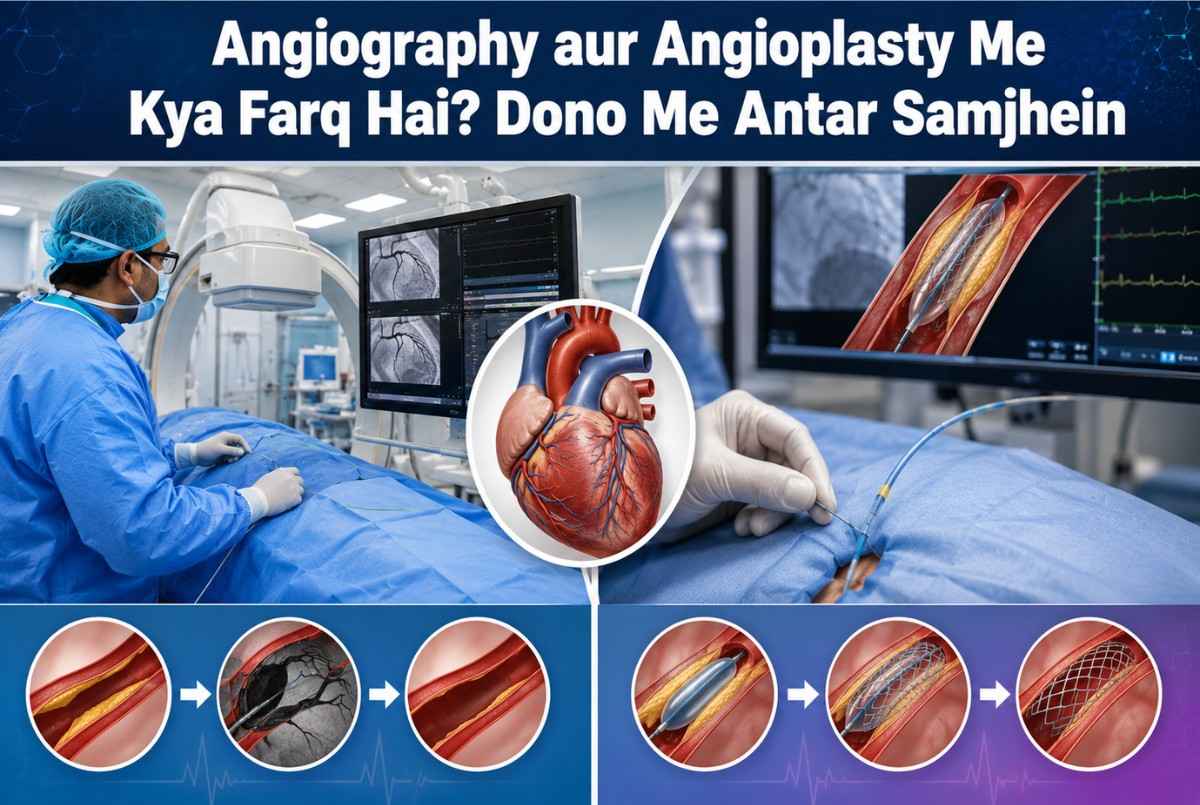
Angiography aur Angioplasty Me Kya Farq Hai? Dono Me Antar Samjhein