
Angiography Test in Deoghar: Purpose, Procedure, and What to Expect
- Home
- Blog
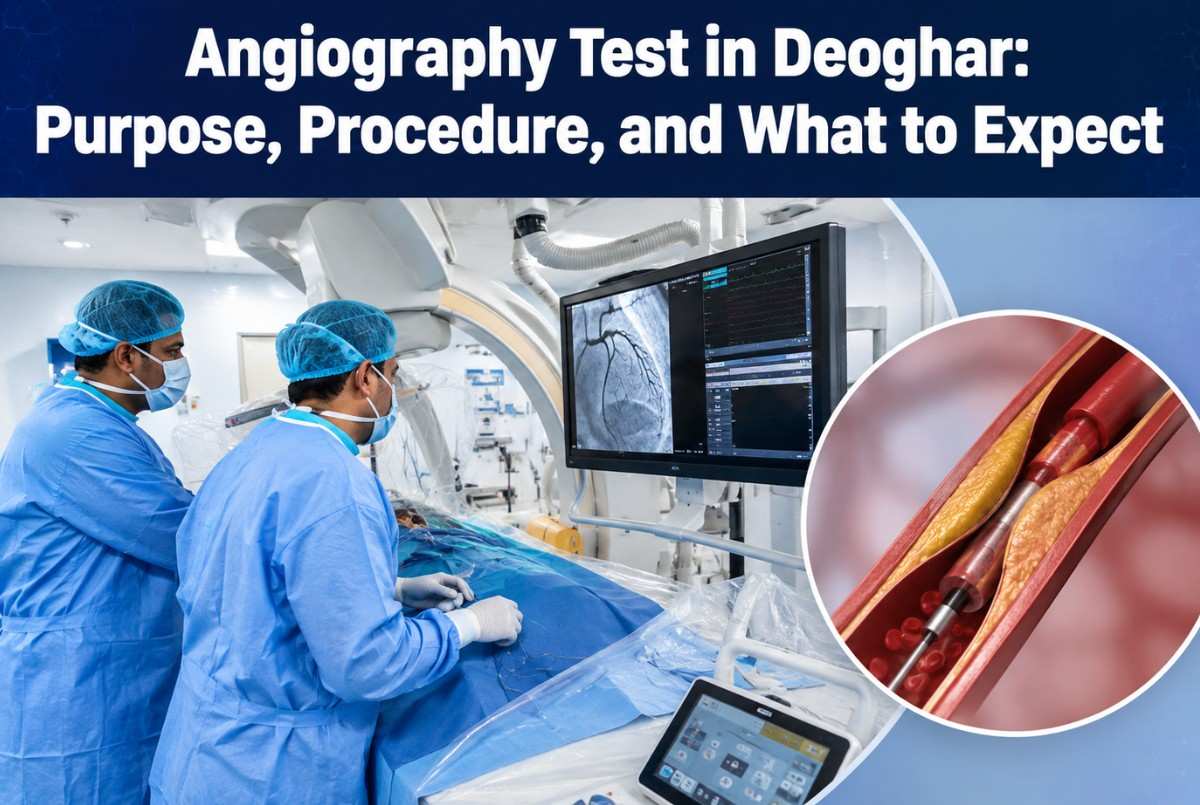
Ramesh’s father had been having chest tightness on and off for two weeks. The family in Madhupur assumed it was gas, then acidity, then “just age.” By the time they reached a doctor, the advice was clear: he needed an angiography in Deoghar, and soon. What followed wasn’t the ordeal they’d braced for — a trip to Ranchi, a week away from home, the cost of travel and lodging on top of treatment. It happened locally, in a single visit.
Understanding Angiography: Why Doctors Recommend This Test
An angiography is not a treatment — it’s a way of seeing. Using a thin catheter, a contrast dye, and real-time X-ray imaging, a cardiologist can map exactly where and how severely your coronary arteries are narrowed. Think of it as a detailed road map of blood flow to your heart. Coronary angiography is primarily a diagnostic procedure. If a significant blockage is found, the cardiologist may recommend angioplasty during the same sitting or plan further treatment based on your condition.
Symptoms, Causes, and Risk Factors
Doctors typically recommend this test when a patient has:
- Persistent or recurring chest pain, especially on exertion
- Breathlessness that doesn’t match physical effort
- Abnormal findings on an ECG, echocardiogram, or stress test
- A history of heart attack, or strong family history of heart disease
- Uncontrolled diabetes, high blood pressure, or high cholesterol, which are common in this region alongside physically demanding rural work and diets high in oil and salt
None of these symptoms guarantee a blockage — but they’re reasons to get checked rather than wait it out.
Why This Matters for Families Across Santhal Pargana
For years, the nearest reliable option for a cardiac angiography meant a trip to Ranchi, Patna, or even Kolkata — six to ten hours of travel, often with a symptomatic patient, plus the cost and logistics of staying near a hospital in an unfamiliar city. Families from Dumka, Giridih, Godda, Jamtara, and Banka know this journey well, and it’s often what delays a best hospital for angiography in Deoghar search until symptoms have already worsened. Having this diagnostic capability locally changes the decision from “can we afford to go” to “when can we go.”
Coronary Angiography Procedure at Medifort, Deoghar
Medifort Wellness Super Specialty Hospital, part of the Medifort Wellness Group headquartered in Bhagalpur, Bihar, runs its Deoghar unit in Jasidih with an in-house Cath Lab and a dedicated cardiac team. The hospital also maintains round-the-clock emergency services, which matters for angiography specifically — because sometimes what starts as a diagnostic test needs to move straight into treatment if a significant blockage is found. Having that continuity under one roof, without transferring a patient elsewhere mid-crisis, is part of what the Bhagalpur group’s clinical infrastructure was built to support.
What to Expect When You Visit
The process is more predictable than most patients expect:
- Consultation — your cardiologist reviews your symptoms, ECG, and other reports to decide if angiography is needed.
- Pre-procedure checks — blood tests, fasting instructions (usually 6 hours before), and a review of your current medications.
- The procedure — done under local anaesthesia, usually through the wrist or groin. You’ll be awake throughout, and the team will talk you through what’s happening.
- Recovery and monitoring — a few hours of observation afterward to check the puncture site and vitals.
- Follow-up — your cardiologist explains the findings and, if needed, discusses next steps like angioplasty.
A common worry patients raise is “is angiography painful” — and honestly, most describe it as uncomfortable rather than painful. The local anaesthetic handles the sharp part; what remains is pressure, and occasionally a warm sensation for a few seconds when the dye is injected.
Myths vs Facts
Myth: Angiography is a major surgery with a long recovery. Fact: It’s a minimally invasive diagnostic procedure. Most patients are up and about within hours, with a small dressing at the entry point.
Myth: If you’re asked to get an angiography, it means you’re definitely having a heart attack. Fact: It’s often precautionary — done to rule things out or plan treatment early, not only in emergencies.
Myth: You have to travel to a metro city for a reliable angiography. Fact: With Cath Lab facilities now available locally in Deoghar, that’s no longer the only option for Santhal Pargana families.
A Patient's Journey
A woman in her late 50s from near Giridih came in with breathlessness she’d been managing with rest for months, assuming it was “just weakness.” Her angiography showed a moderate blockage — not urgent enough for immediate intervention, but significant enough to change her medication and lifestyle plan going forward. She now credits the local test with catching something she might otherwise have ignored until it became a crisis.
Warning Signs You Should Not Ignore
- Chest pain or tightness lasting more than a few minutes, especially with exertion
- Pain spreading to the arm, jaw, or back
- Sudden breathlessness, sweating, or dizziness
- Fainting or near-fainting episodes with no clear cause
- Rapid or irregular heartbeat accompanied by discomfort
Always consult a qualified and experienced medical professional for accurate diagnosis and appropriate treatment. This article is for informational purposes only.
People Also Ask (5):
- Is angiography a painful procedure? — Most patients feel only a mild pinch at the entry point from local anaesthesia; the rest of the procedure is generally painless, though some feel a warm sensation when the dye is injected.
- How long does an angiography test take? — The procedure itself usually takes 30-45 minutes, though patients are monitored for a few hours before and after.
- Is angiography a surgery? — No. It is a minimally invasive diagnostic procedure, not open surgery, and typically doesn’t require an overnight hospital stay unless further treatment is needed.
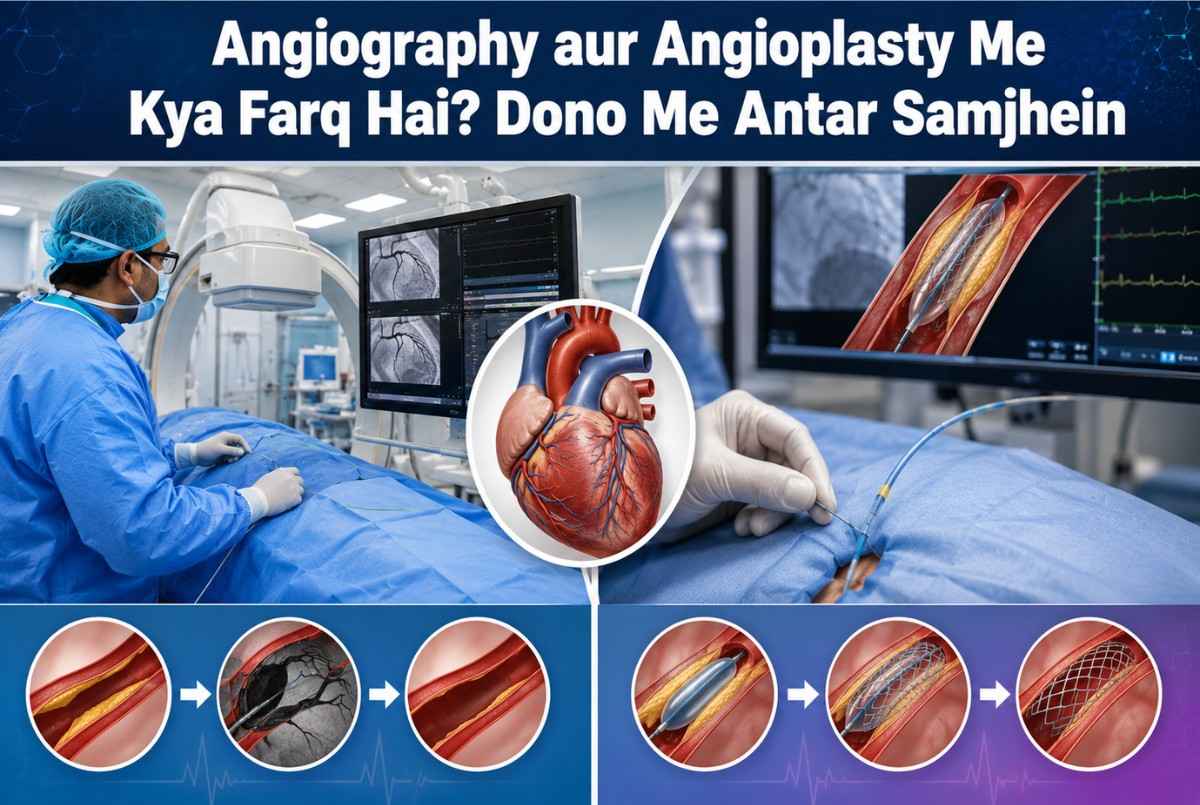
- What is the difference between angiography and angioplasty? — Angiography is diagnostic (it shows the blockage); angioplasty is the treatment (it opens the blockage), often done in the same sitting if needed.
- Can angiography be done on the same day as consultation? — In many cases yes, if the cardiologist determines it’s urgent, though it’s usually scheduled after initial tests like ECG and echo.
Frequently Asked Questions
coronary angiography is an imaging test that shows whether the arteries carrying blood to your heart are narrowed or blocked. Doctors usually recommend it after symptoms like chest pain, breathlessness, or an abnormal ECG/stress test, so they can see the exact location and severity of any blockage.
Most patients describe it as uncomfortable rather than painful. A local anaesthetic numbs the area where the catheter enters (usually the wrist or groin), so you shouldn't feel sharp pain — just pressure or a brief warm flush when the contrast dye is released.
Angiography test price in Deoghar varies depending on the approach used (radial vs femoral), whether it's combined with other tests, and room category if admission is needed. For an accurate, itemised estimate, it's best to speak directly with the hospital's billing or patient care desk.
Often it's a day-care procedure — you're monitored for a few hours after and can usually go home the same day, unless the results indicate the need for further treatment or overnight observation.
Carry previous medical records (ECG, echo, blood reports), a list of current medications, and follow any fasting instructions given by your cardiologist. Inform the team if you have kidney issues, diabetes, or allergies to contrast dye.
Medifort Wellness Super Specialty Hospital has an in-house Cath Lab and cardiac team in Jasidih, Deoghar, meaning families from Dumka, Giridih, Godda, and Jamtara no longer need to undertake a long, often anxious journey for a diagnostic test like this.
Ready When You Are
If chest discomfort or breathlessness has been on your mind, you don’t have to carry that uncertainty alone or plan a long trip out of Jharkhand to get answers. Medifort Wellness Super Specialty Hospital’s Jasidih, Deoghar unit offers angiography testing with a dedicated cardiac team and round-the-clock emergency support. You can book an appointment through the OPD or reach out directly if the situation feels urgent — either way, someone will walk you through what comes next.
Share It:
-
Regular Heart Checkups Shuru Karne Ki Best Age: Deoghar Residents Ke Liye Ek Prevention Guide
-
Cholesterol and Heart Health: A Preventive Heart Checkup Guide
-
High Blood Pressure aur Aapka Heart: Wo Risks Jinhe Ignore Nahi Karna Chahiye
-
Diabetes and Heart Disease: The Hidden Connection
-

Is Heart Stent Surgery Safe? Myths and Success Rates Explained
-
Angiography aur Angioplasty Me Kya Farq Hai? Dono Me Antar Samjhein